A grocery buyer, café owner, or contract caterer needs a reliable source of biscuits – but the terms “wholesale” and “bulk” often blur together. This article explains the practical differences between wholesale biscuit suppliers and bulk biscuit suppliers, how each model affects cost, packaging, shelf life, and delivery, and which choice suits different business needs. Read on to learn how to match supply type to sales channel, storage capacity, and product mix so ordering becomes simpler and margins improve.
What wholesale biscuit suppliers offer
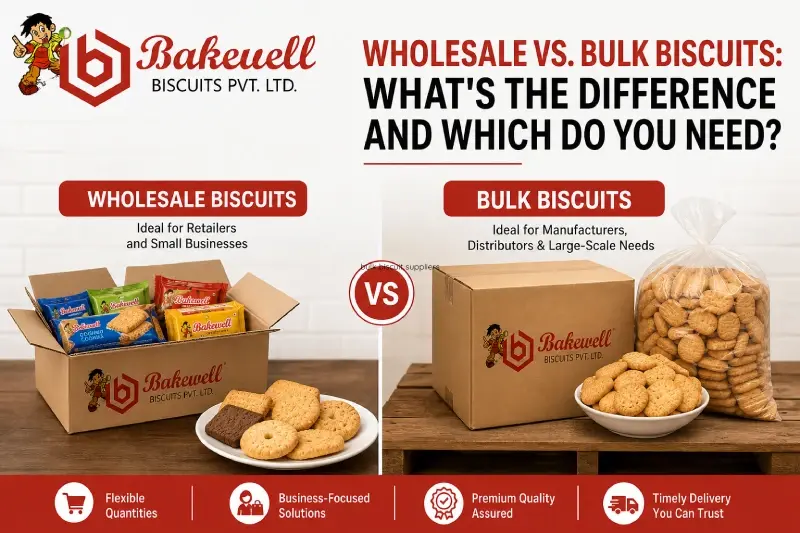
Wholesale biscuit suppliers typically sell branded and private-label biscuits in case quantities designed for retail shelves and cafés. These suppliers curate assortments – cookies, cream-filled biscuits, crackers, and health-focused options – then package them in retail-ready boxes or multi-packs. The pricing follows a per-case discount model: buys more SKUs or higher volumes and the unit price drops. Wholesale suppliers often set minimum order quantities per SKU (for example, 10 cases per flavor) and provide invoice terms such as net 30 for approved accounts.
Wholesale supply chains focus on consistent branding, barcodes, and packaging that customers expect on store shelves. This means fewer handling steps for retailers: products arrive consumer-ready, ready to stock or place on a display. For businesses that prioritize presentation and SKU breadth – convenience stores, small supermarkets, and cafés selling packaged snacks – wholesale biscuit suppliers reduce labor and speed replenishment.
Wholesale suppliers also handle product traceability and compliance. They provide batch codes, nutrition panels, and often manage promotions like seasonal packs or co-branded offers. The logistics tend to favor frequent, moderate-sized deliveries: weekly or twice-monthly shipments that align with retail turnover. Delivery schedules and palletized loads are the norm, and many wholesalers integrate with ordering platforms that simplify restock forecasts.
What bulk biscuit suppliers offer
Bulk biscuit suppliers sell loose or industrial-pack biscuits in larger volumes and with fewer retail-ready finishes. Products arrive in sacks, large cartons, or plastic drums, sometimes unwrapped or in minimal inner packaging. The focus is on maximum volume at the lowest possible price per kilogram, which suits manufacturers, bakeries that rework biscuits into other products, and event caterers who need vast quantities without branded packaging.
Bulk offerings may include raw or semi-finished items: biscotti halves for dessert assembly, broken biscuits for crumb applications, or unglazed plain biscuits destined for coating. Suppliers often allow custom fills – single-flavor pallets, mixed pallets, or bulk blends – which helps businesses reduce SKU complexity and reorder predictable quantities. Pricing structures reward scale, with steep discounts as order weight increases; however, buyers must be prepared for manual handling and repackaging in many cases.
Storage and shelf-life considerations
Storage capacity and shelf-life expectations influence the choice between wholesale and bulk. Wholesale biscuits usually come individually wrapped or in sealed retail packs designed to protect freshness for months. That makes them suitable for retailers with limited backstock space because shelf-ready packs stack neatly and stay fresh on shelves.
Bulk biscuit suppliers deliver higher volume in denser packaging, which can reduce protection against moisture and breakage unless repackaging occurs immediately. Industrial buyers often move product quickly into climate-controlled storage or process the biscuits into finished goods within days to avoid quality loss. For businesses without proper storage – non-refrigerated warehouse without humidity control or limited manpower for repacking – wholesale supply protects product integrity better.
Cost structure and margin impact
Unit cost and handling cost shape final margins. Wholesale pricing gives reliable unit costs for shelved items and removes the need for repackaging labor. That predictability helps small retailers model margins and promotions. On the other hand, bulk biscuit suppliers usually present the lowest unit price but add hidden costs: labor for repacking, higher waste from breakage, and potential quality control investment.
For example, a café that packages single-serve biscuit portions will likely save on total cost per served piece by buying bulk and repacking, provided staff time and packaging materials are accounted for. A convenience store with limited employees might find wholesale cases more economical because the time saved in handling offsets the slightly higher per-unit cost. Buying decisions should factor in total landed cost: product price, transport, handling, storage loss, and order frequency.
Order size, lead time, and flexibility
Wholesale biscuit suppliers generally work with predictable lead times and recurring order cycles. Because products are branded and packaged, replenishment schedules tie to consumer demand forecasts. This model benefits buyers who need consistent SKU availability and predictable delivery windows.
Bulk suppliers, however, often offer flexibility in batch sizes but expect larger minimum orders. Lead times can vary depending on production schedules and the need to assemble large pallets. Some bulk suppliers allow split deliveries across locations or offer consolidation to reduce freight costs, useful for regional distributors. Businesses that can forecast demand weeks ahead will benefit from negotiating staggered shipments to manage cash flow and storage.
Quality control and supplier relationships
Wholesale suppliers usually maintain strict quality control aligned with retail expectations. Product consistency, clear shelf labels, and certified ingredients reduce the buyer’s responsibility for inspection. Wholesale relationships tend to be transactional but can mature into cooperative arrangements where retailers receive promotional support, merchandising materials, and product training.
Bulk suppliers require more active quality checks at receipt because product may arrive in less-protective packaging and with variable breakage levels. Long-term partnerships with a bulk supplier open possibilities for custom formulations, specific crumb size for coatings, or tailored moisture levels. Manufacturing customers often benefit from co-development work that adjusts biscuit hardness, sweetness, or size to match an application.
Which option suits different businesses
Retail chains and mom-and-pop stores: Wholesale biscuit suppliers fit best. These businesses need retail-ready packs and predictable shelf life with minimal handling.
Cafés, delis, and foodservice outlets: Mix both. Use bulk for in-house portioning and wholesale cases for grab-and-go counters where presentation matters.
Large caterers and event planners: Bulk biscuit suppliers make sense when event volumes are high and repacking into servings is routine.
Manufacturers and bakers: Bulk is preferable for ingredient integration – biscuit pieces, crumbs, or semi-finished items that become part of another product.
Online snack sellers: Wholesale for brand variety and ease of shipping, bulk when assembling own-branded packs to lower unit cost.
Practical checklist before choosing a supplier
Assess storage and staffing first: does the operation have humidity-controlled space and staff for repacking? Calculate true landed cost: include freight, packaging, repack labor, and spoilage. Check minimum order quantities and how they match sales velocity. Request sample shipments to measure breakage and actual shelf life under local storage conditions. Verify certification and traceability for both food safety and customer reassurance.
Negotiation tips and contract points
Negotiate payment terms that match cash flow – not every buyer needs net 30, but it’s useful for growth. Ask for piloted smaller shipments to test product quality. Lock in price bands for 3–6 months to avoid sudden margin compression. For bulk suppliers, include agreed maximum breakage rates and remedial actions. For wholesalers, request promotional support and clear return policies for damaged retail packs.
Sustainability and packaging considerations
Packaging waste differs sharply between models. Wholesale biscuits arrive in retail wraps designed for consumer convenience, often increasing single-use materials. Bulk biscuit suppliers can reduce packaging per kilogram by shipping in large reusable containers or minimal packaging, which helps businesses pursuing lower waste footprints. Buyers aiming to reduce single-use plastics should ask suppliers about recyclable or returnable packaging and whether bulk product can be transferred into compostable inner liners during repacking.
Decide by mapping storage capability, staff time, and sales channel: choose wholesale biscuit suppliers when presentation and low handling matter; choose bulk biscuit suppliers if lowest unit cost and in-house processing make sense. The immediate next step is to run a one-month cost trial: order a small wholesale case run and a comparable bulk pallet, track total costs, breakage, labor time, and shelf performance, then pick the model that improves margin without undermining customer experience.
FAQs
1.Can a small café use bulk biscuit suppliers locally?
Yes. A small café can source from local bulk biscuit suppliers if space exists for repacking and if staff can portion and rewrap. Local suppliers often offer shorter lead times and lower freight, which helps with perishable items. Confirm sample quality and breakage before committing to large pallets.
2.Are wholesale biscuit suppliers better for online snack stores in India?
Often yes. Wholesale biscuit suppliers provide retail-ready packaging that simplifies fulfilment and customer returns. For Indian online sellers handling multiple SKUs, wholesalers reduce repacking time and help standardize shipping weights.
3.How to compare costs between a wholesale case and bulk pallet?
Compare the price per kilogram, add freight, repackaging materials, labor hours times wage rate, and expected waste rate. The full landed cost per usable biscuit reveals which option is cheaper for the buyer’s operations.
4.Do bulk biscuit suppliers accept returns for damaged goods?
Policies vary. Some bulk suppliers accept claims for damaged pallets or excessive breakage within an agreed inspection window. Always negotiate return terms and damage thresholds before the first order and document them in the purchase agreement.
5.Where to find reliable bulk confectionery and biscuit suppliers?
Trade shows, food industry directories, and referrals from local manufacturers are strong starting points. Look for suppliers with food-safety certifications, a willingness to provide samples, and transparent logistics terms.